The story
What if the loudspeaker layout is the thing that keeps changing?
A conventional listening room is usually designed around one answer: a stereo pair, a 5.1 layout, a cinema array. That is efficient until the room is expected to teach, compare or convert between systems that make different assumptions about where sound should come from.
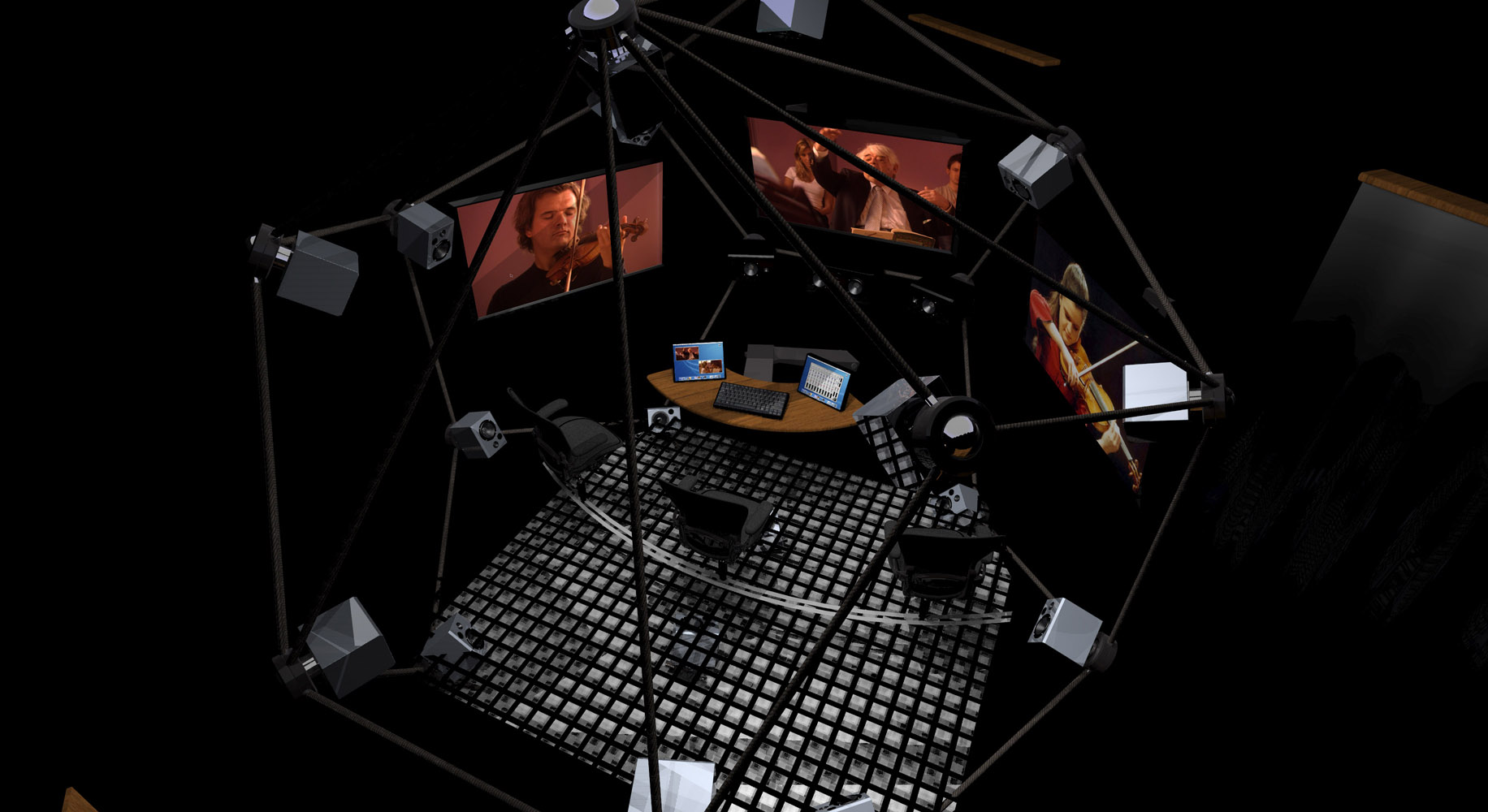
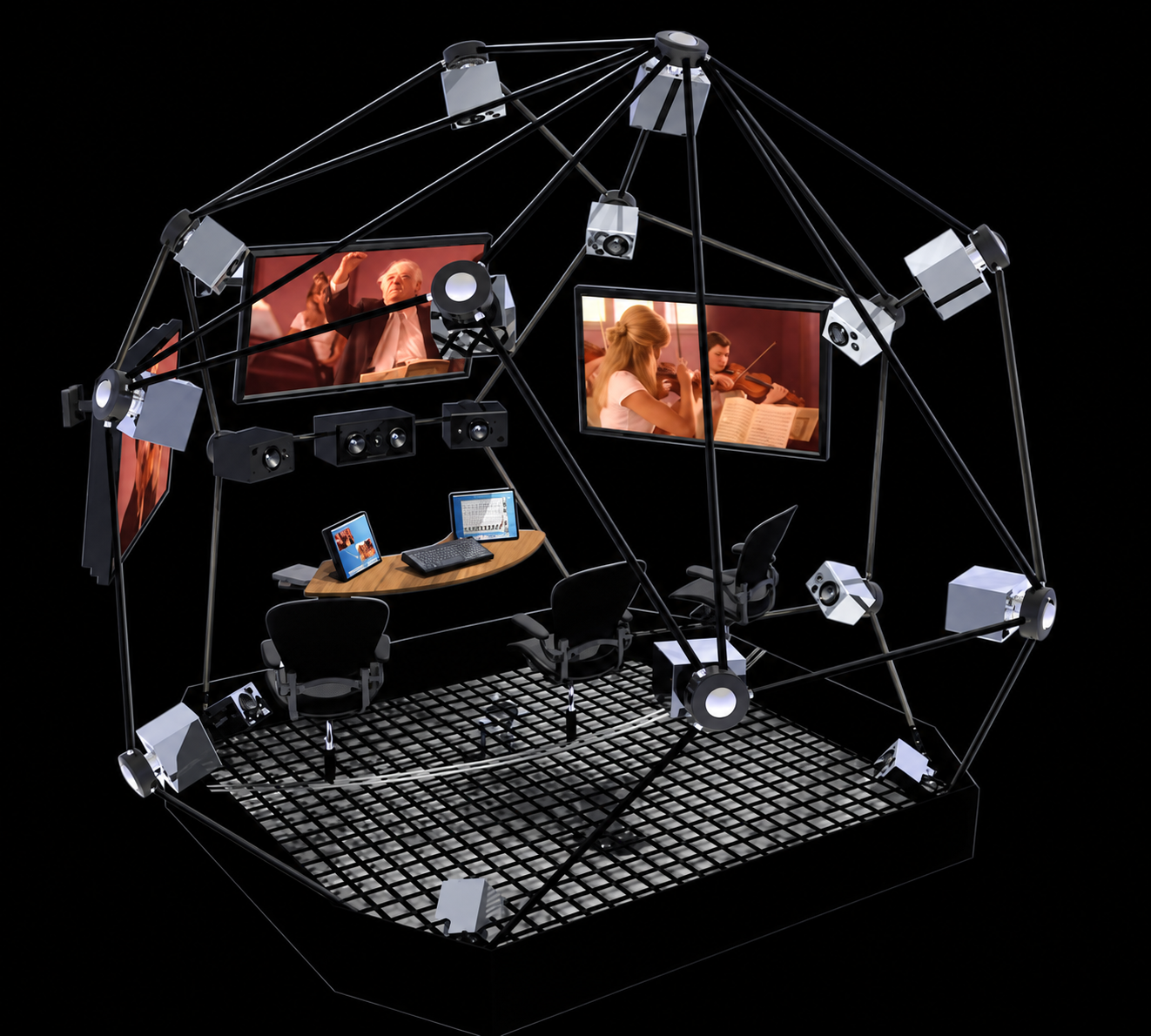
AGM’s Replay Environments work approached the room as a configurable multichannel instrument. The development record describes support for Ambisonic and other surround replay, conventional stereophony, evaluation, reformatting and signal-processing functions. The objective was not a spectacular collection of loudspeakers for its own sake, but a space in which different spatial formats could be heard and judged on their own terms.
The loudspeakers are not the artistic destination. They are merely the mechanism by which an encoded soundfield is reconstructed. The reproduced acoustic event is the product.
The presentation image was deliberately simpler than the idea
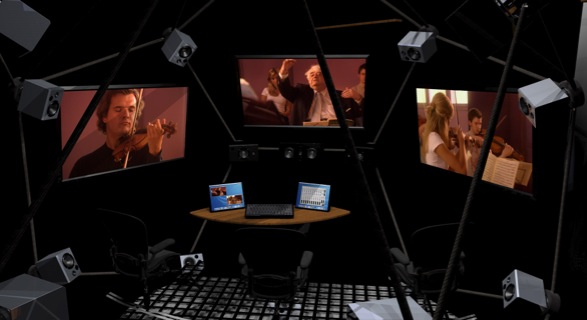
Contemporary client renderings used conventional-looking loudspeakers because they were easier to read in a presentation. The surviving 12ton development page explicitly notes that the actual loudspeaker concept looked more like small spheres. That small distinction is useful: the design was about the geometry and function of the soundfield, not about making a room look futuristic.
Part of a longer AGM habit
The project sits naturally beside the earlier Virtual Room work, MR1 microphone system and later high-channel-count exhibition installations. Across all of them, the recurring question was similar: how can a technical system adapt to the artistic or listening task rather than forcing the task into one fixed format?